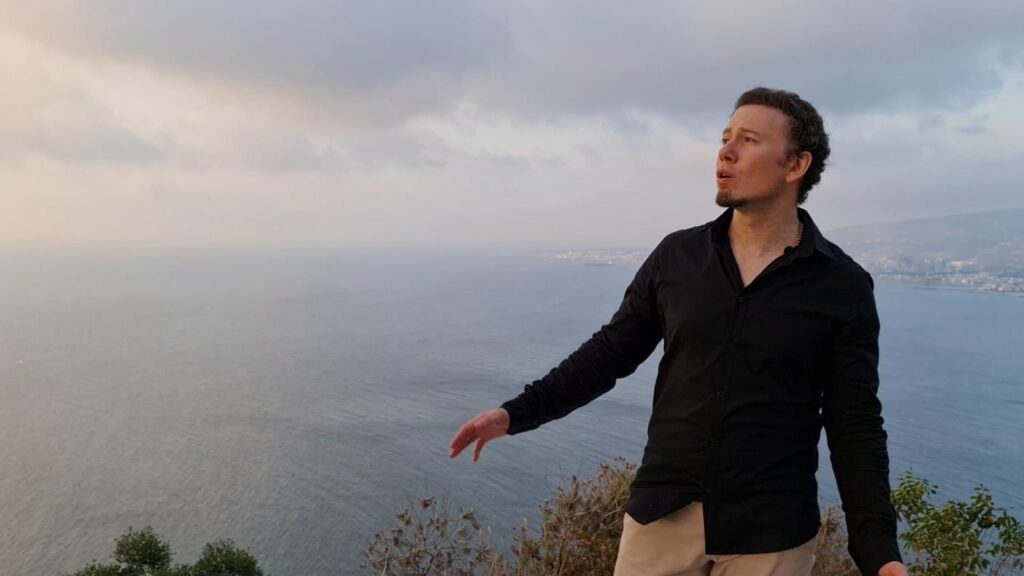
Few artists navigate the worlds of music, technology, entrepreneurship, and personal development with the versatility of IJK (Imad Jack Karam). A talented rock singer-songwriter and podcast host, IJK has developed a distinctive sound that combines classic rock & roll and crooner influences with synth textures, soaring falsetto, memorable melodies, and thought-provoking lyrics.
Influenced by legendary artists including The Doors, Roy Orbison, U2, Keane, and Elvis, his music reflects a lifetime shaped by multicultural experiences, travel, creativity, and an enduring curiosity about the world. From his first original release, Space Odyssey, in 2016 to his latest single, Johnny & June, IJK has continued to evolve both as a musician and storyteller. Alongside his artistic career, he hosts The IJK Podcast, exploring technology, business, entrepreneurship, and personal development, while drawing on more than 17 years of experience in digital marketing and senior roles with major global companies.
In this exclusive interview, we explore IJK’s artistic journey from its beginnings to the present day, the influences and experiences that shape his songwriting, his distinctive musical identity, the creative philosophy behind his podcast, and the many sources of inspiration that continue to drive his life and work.
Ad
IJK, thanks a lot for being with us today! We are thrilled to know more about your art and latest projects, so let’s start from the very beginning. Your artistic journey began long before your first original release, “Space Odyssey,” in 2016. Looking back to the beginning, what first made you realise that music—and particularly rock and songwriting—was something you needed to pursue, and how has that initial motivation evolved over the years?
Thank you for having me! Very pleased to talk to you.
Music has always been a part of me, as a person and artist. Since my childhood, I have always been drawn to the world of sounds and melodies. Even today, I still have sweet memories of my childhood in the 80s, linked to nostalgic tracks from various synth-pop artists like Desireless (Voyage Voyage), Alphaville, A-ha, or Tears for Fears.
Then, in my early teens, I picked up my first guitar and started singing during friends’ gatherings who told me I have a good voice. At that time, I was extremely passionate about rock and roll and, more specifically, the music of Elvis, Roy Orbison, and Jerry Lee Lewis. I believed these figures were pioneering legends who invented modern music, and I was so excited to know everything I could about them. Anyway, this encouraged me to take music more seriously, and I started to develop my voice, style, and art.
Then, around the age of 19, I participated in the national Lebanese Karaoke Championship, then aired by Télé Liban, and I came up third in the male category. I sang many songs like Oh Pretty Woman (Roy Orbison) and It’s Now or Never (Elvis) to a highly engaged audience. This gave me a boost of confidence in my vocal abilities and encouraged me to experiment further with my voice and even start writing my first songs during my early twenties. I knew then that music and singing were a natural part of who I am and who I’ll always be.
After participating in various rock bands during my university years at Université Saint Joseph and then HEC in France, I moved to London in 2007 and started my own solo musical project under the stage name IJK, the initials of my full name, Imad Jack Karam.
My first EP, titled Dancing Shadows, was released in 2009. And as you said, “Space Odyssey” was then released in 2016, with a cool music video, and it got positive reviews from my audience and reviewers.
Your Lebanese-Greek heritage and your experiences living, performing, and recording in different places have clearly contributed to your creative identity. How have your cultural background, travels, and encounters with people from different cultures shaped the way you see the world and, ultimately, the way you create music?
That’s a great question. As an artist, I believe that one’s life experience, the pains and the pleasures, the hopes and fears, the ups and downs, or simply the experience of certain memorable events are the main sources that fuel the songwriting process and artistic output.
Without these unique, personal, and even intimate life experiences and encounters, art becomes nothing more than a commercial commodity. And to your point, travelling, living in different cities, and getting exposed to different cultures and backgrounds were indeed the source of my own art and music.
I do have Lebanese and Greek roots, but I am also Canadian. Over the years, I have lived in Beirut, Paris, London, Dubai, and now I am based in Toronto since 2022. I think my multicultural background has definitely had a huge impact on my art. Although I sing and write mostly in English, I have also performed in French and even in Italian and Lebanese.
Your sound brings together rock & roll, crooner influences, synth textures, soaring falsetto, and catchy melodic writing. How would you describe the IJK sound today, and what are the essential ingredients that make a song unmistakably yours?
I love to blend elements from various genres and eras. For instance, in my song “Space Odyssey”, you will notice that it is mostly a piano and synth-driven pop-rock ballad. If you listen to “Johnny & June”, the music is more rock-driven with soaring vocals and a more live sound. So, it really depends on the concept I have in mind. I have no problem switching between styles or even blending them; I think I actually enjoy this experimentation.
Now, to answer what makes a song unmistakably mine, I think it is mainly the topic/lyrics and my voice itself.
I love to tell stories with my songwriting. I think we human beings respond to stories. It is in our myths and legends. Stories are how true meaning can be conveyed. And I think they make artistic creations, especially songs, so much more captivating and memorable.
You have cited artists such as The Doors, Roy Orbison, U2, Keane, and Elvis as influences. What have you learned from these artists—not simply musically, but in terms of performance, storytelling, identity, and the ability to connect with an audience—and how do those influences coexist with your own artistic voice?
Yes, I truly admire all those great artists you cited. I think my singing style and vocal abilities have been greatly influenced by listening to these fantastic singers.
I would say my main vocal influence sits between Roy and Elvis, with some Jim Morrison or Bono when I approach a harder rock style. But I also learned a great deal from listening to other “pure” rock frontmen, so to speak, like Ian Gillan from Deep Purple or Jeff Buckley. These two amazing vocalists helped me perfect my head voice and falsetto, which you can hear in many of my performances.
Your songwriting often combines memorable melodies with lyrics that invite listeners to think. When you begin writing a song, what usually comes first for you: a melody, a lyric, an image, an emotion, a story, or perhaps something completely unexpected?
I usually start with a melody. I think finding a strong and catchy melody is the core of a good song. Lyrics can always be added later. I am not saying this is the correct way of doing it, but this is how it worked for me.
However, lyrics are extremely important. They give meaning to the composition. Lyric-wise, I tend to tackle certain recurrent topics that matter a lot to me. This includes the human condition, philosophical questions (like where do we all come from and where are we all going ultimately?), or the celebration of simple emotions or life experiences, like infatuation, love, or the ephemeral beauty of life.
You have collaborated with producers who have worked with internationally renowned artists such as U2 and Sting. How have those collaborations influenced your development as an artist, and what have you learned from working with experienced producers and musicians?
I did indeed. For example, my single “High Tide” was produced by Steve Williams at his Chapel Studio in London. It was great to collaborate with him and other high-caliber music professionals.
I think there is always something to learn from interacting with industry pros, especially when it comes to perfecting the quality of the music, the recording and mixing process, and overall, how to transform a song concept into a finished product that can air on radio or streaming sites.
Of course, today, in the age of AI and Suno, things are completely different and will probably become more so in the years to come. But that’s a different talk for another time.
Ad
Your career extends far beyond music: you are also a digital marketing consultant with more than 17 years of experience, having worked in senior roles for major companies including Google and Walmart. How do your experiences in technology, business, and marketing influence the way you approach music and the creative industry?
My business career was foundational in helping me understand how to market my art and music. Understanding technology and marketing techniques were very important in helping me promote my work and treating my musical endeavors, whether it’s a song to write or a music video to produce, as standalone projects to complete.
So, yes, my business experience has definitely helped me develop these crucial organization and project management skills, in addition to handy marketing skills necessary to showcase my music to new audiences.
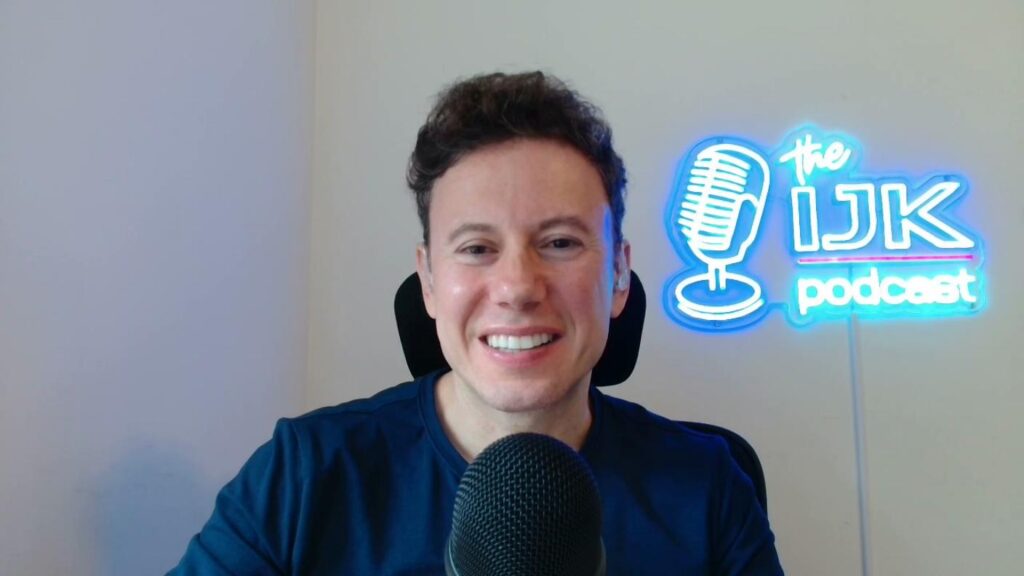
You also host The IJK Podcast, exploring technology, business, entrepreneurship, and personal development. What inspired you to create the podcast, and what have the conversations and people you have encountered through it taught you about creativity, ambition, success, and personal growth?
I see my podcast as an extension of my music and my art. If you think of it, this is just another way to communicate and talk about the human condition and all the topics that matter to us, people living on this planet.
For those who don’t know my show yet, the IJK Podcast features me interviewing thinkers and subject matter experts in business, science, philosophy, and personal development. I started this project in 2023 and have had great guests on the show so far, including best-selling author and psychologist Dr Robert Cialdini, Oxford mathematician John Lennox, and world-renowned philosopher Dr. William Lane Craig.
I love to talk to experts and thinkers from different disciplines, learn from them, and exchange ideas. But, as you will notice if you check out the podcast, I usually love to focus on big questions like: What is human consciousness? What is the future of humanity with AI? Or even: why is there something rather than nothing?
During these one-hour conversations, I usually focus on one main subject, and my goal is to simply inspire listeners to think about these topics that I find highly interesting.
There is an interesting connection between your music and your podcast: both seem to be ways of exploring people, ideas, experiences, and the world around you. Do you see these two sides of your creativity as separate projects, or are they ultimately different expressions of the same curiosity?
I think you are spot on. I think my music and my podcast are ultimately different expressions of the same curiosity. It is just a change of medium.
Whether it’s through music or interviews, it is all about engaging audiences and inspiring them.
I also ventured a bit into movie making, which is yet another medium. In March 2023, I released an animated short movie featuring a remixed version of my song “The Red Light Inn”. The movie was called “The Red Bond,” and quite surprisingly, it has made the official selection at a number of film festivals around the world.
It even received a number of awards, including the IndieFest Film Awards, the Reale Film Festival, and World Film Carnival Singapore. I am also very proud of my work in animation (I am a huge anime fan, by the way).
After years of music, international experiences, entrepreneurship, technology, and storytelling, what subjects or experiences are inspiring you most at this stage of your life? Are there particular themes, sounds, places, people, or questions that you feel compelled to explore through your next music?
I am always on the lookout for new experiences, new places to visit, and new people to meet. Musically, I currently have a couple of ideas in my mind. I would love to experiment with some pure electronic music, think EDM with some cool vocals. This is something I haven’t tried yet. Nothing serious as of now, but this new direction could be one possibility. I have always loved techno and EDM.
On the other hand, I have written a song in my early twenties that I never had the chance to record yet. That is also another possibility. We’ll see.
Ad
IJK, it was a real pleasure having you with us today. To conclude this interview, when you look toward the future, what would you most like people to discover when they encounter IJK—whether through your music, your podcast, or your broader creative journey? What do you hope your work ultimately leaves with the listener or viewer after the song ends or the conversation is over?
Ultimately, I hope to spark people’s curiosity and draw them into a world of wonder, beauty and meaning. I believe we live in a universe with many mysteries.
Our lives seem like specks of dust when you zoom out, but despite this appearance, there is a lot of meaning that we ascribe to our feelings, achievements, and overall lived experience.
I would even say that everything we do is a quest for meaning and simply trying to live this exciting adventure that we call life to the fullest. And through my music and my podcast, I try to remind people of all these little wonders, things that are quite enjoyable for their own sake, like falling in love, or looking at a star, or even dancing for the sake of dancing. That is what I hope to achieve.
Thank you for the interview; this was quite enjoyable.
Check the links below to discover more about Imad Jack Karam, his music, and all his projects, and remember to add his songs to your favorite playlists!
Ad