
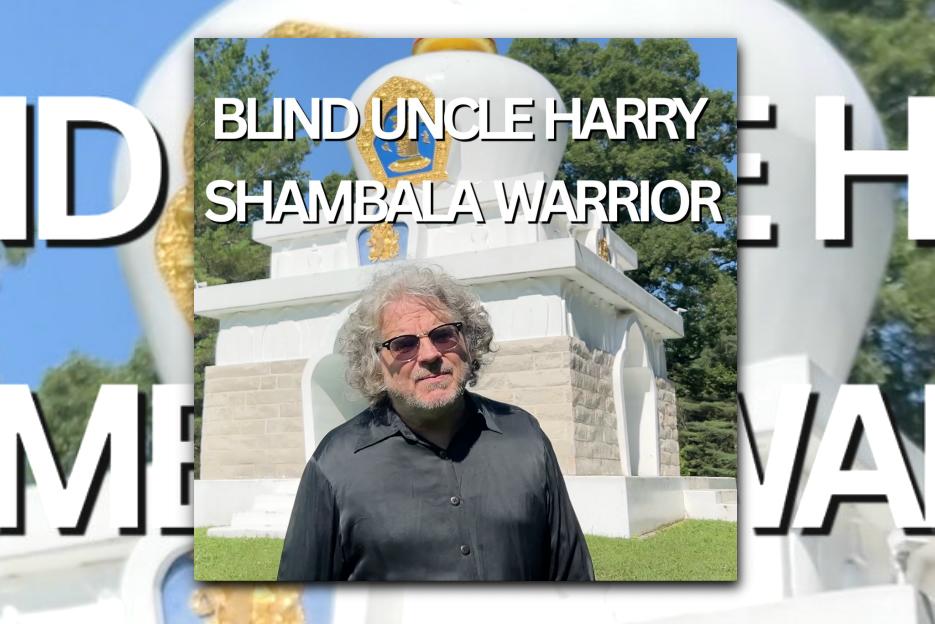
There are few artists who can move so effortlessly between humor, social commentary, heartfelt storytelling, and deeply meaningful themes as Blind Uncle Harry. The self-described “hillbilly hippie shreddin’ folk rock storyteller” has built an unmistakable artistic identity around his ability to transform observations about society, human relationships, and everyday absurdities into songs that are simultaneously entertaining, thought-provoking, and profoundly authentic. With his latest single, “Shambala Warrior,” he reveals yet another side of his remarkably versatile creativity.
Following releases that have explored everything from comedic cultural commentary to powerful social and political themes, “Shambala Warrior” represents a fascinating change of direction. Its outstanding ethnic sounds, vibrant sonorities, and richly developed harmonic architecture immediately distinguish it from much of Blind Uncle Harry’s previous work. Yet beneath this new sonic landscape remains the same fearless songwriter whose music has consistently refused to fit comfortably inside conventional boundaries.
Following releases that have explored everything from comedic cultural commentary to powerful social and political themes, “Shambala Warrior” represents a fascinating change of direction. Its outstanding ethnic sounds, vibrant sonorities, and richly developed harmonic architecture immediately distinguish it from much of Blind Uncle Harry’s previous work. Yet beneath this new sonic landscape remains the same fearless songwriter whose music has consistently refused to fit comfortably inside conventional boundaries.
Ad
The track arrives after the politically charged and socially powerful “I’ll Never Be White Like You,” demonstrating just how dramatically Harry can shift his creative perspective. Where that song confronted questions of identity and society with uncompromising directness, “Shambala Warrior” turns toward spirituality, compassion, healing, and the possibility of positive transformation. The inspiration behind the song is particularly fascinating. Blind Uncle Harry explains that its central concept comes from a Tibetan Buddhist prophecy concerning the emergence of Shambhala Warriors when the world faces the danger of destruction. According to the tradition that inspired him, these figures bring healing and positive change through compassion and insight. Harry connects the idea to the Bodhisattva tradition—the concept of enlightened individuals choosing to return in order to help others reach enlightenment.
For Harry, however, this is far more than an abstract spiritual idea. He explains that he has met people he genuinely believes to be Bodhisattvas, including one particularly important person for whom he wrote the song. That personal connection gives “Shambala Warrior” an emotional dimension that goes beyond its intriguing concept. The song becomes an expression of admiration and gratitude, while simultaneously opening a much broader reflection on humanity’s capacity for kindness and transformation.
Musically, the track is a remarkable departure that nevertheless feels completely natural within Harry’s constantly evolving artistic universe. The ethnic-inspired sonic palette immediately creates a sense of mystery, while the vibrant instrumentation and carefully constructed harmonic layers give the composition an almost transcendent atmosphere. Rather than relying on the stripped-down folk-rock simplicity that characterizes some of his comedic storytelling, Harry embraces a more expansive musical architecture, allowing the arrangement itself to become part of the narrative.
Ad
This willingness to experiment has always been one of the most compelling characteristics of Blind Uncle Harry’s work. His previous releases have demonstrated an extraordinary ability to find music inside seemingly ordinary observations. “I Have No Expectations,” for example, transformed a humorous philosophy about avoiding disappointment into a catchy and carefree anthem, while “Hey Hey Kendra Ann” combined infectious riffs and sing-along energy with Harry’s trademark wit. Likewise, “Kimberly Kankowski” showcased his talent for character-driven storytelling, using clever imagery, playful rhythms, acoustic guitar, and mischievous humor to explore cultural contradictions and social absurdities. The song demonstrated how effectively Harry can turn individual characters and everyday situations into larger observations about contemporary life.
“Shambala Warrior” reveals the other side of that same songwriting philosophy. Here, instead of laughing at the contradictions of society, Harry searches for something capable of transcending them. The result is a song centered on compassion and insight, offering a message that feels particularly meaningful in an increasingly divided world. The release also forms another fascinating chapter in the story of an artist who has consistently followed his own creative instincts. From the folk-rock and Americana-infused “Visualize Industrial Collapse” to the heart-forward themes of “Courage to Love,” Harry has demonstrated that his songwriting cannot be reduced to one mood, genre, or subject. His greatest constant is his willingness to explore.
With “Shambala Warrior,” Blind Uncle Harry once again proves that originality comes from remaining open to unexpected ideas. The track’s vibrant ethnic textures, spiritual inspiration, and positive message create an intriguing new dimension within his catalogue, while his distinctive artistic personality remains unmistakably present. Blind Uncle Harry has once again stepped outside the expected—and discovered another fascinating world waiting on the other side.
Check the links below, discover more about Blind Uncle Harry and his music, and remember to add his songs to your favorite playlists!
Official Website: www.blinduncleharry.com
YouTube: Blind Uncle Harry
Soundcould: Blind Uncle Harry
Spotify: Blind Uncle Harry
Facebook: Blind Uncle Harry