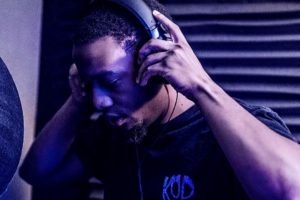

Hailing from Tallahassee, Florida, Aaron Watson III is more than just a saxophonist—he’s a musical storyteller whose sound bridges jazz, soul, reggae, and funk with striking originality.
With over 15 years shaping the North Florida music scene, Aaron has performed alongside legends like George Clinton and Fred Wesley, led the acclaimed Pharaohs of Funk, and inspired the next generation as an educator and mentor.
Now, as he prepares to release his highly anticipated debut album Roots of Renewal, Aaron reflects on his journey, artistry, and the vision that continues to fuel his passion for music.
Ad

Hi Aaron, and thank you so much for being with us today! We are thrilled to know more about your music and your artistic journey. Your path as a musician spans more than 15 years in the North Florida scene. Looking back, what were some pivotal moments that shaped your path as both a performer and a storyteller through music?
Thank you for having me for this interview. One of the biggest pivotal moments for me as a performer so far was when I played for my grandfather as he was lying down. He couldn’t talk or move, but somehow the music I played for him gave him the ability to turn his head and look me in my eyes with passion; he even tried to sit up for a second. I learned then just how powerful music can be. When he passed away, I was told that he had played the saxophone in his youth. This changed how I played spiritually because I understood the feelings and emotions that I had when I played at his funeral. I always search for that feeling when I play because it’s an authentic emotion and expression that spreads joy to myself and my audience.
You’ve had the opportunity to perform alongside legends like George Clinton and Fred Wesley. How did those experiences influence your approach to music and live performance?
Oh man, well first George Clinton can pull something out of humans that is unexplainable; you have to experience the light that shines off of him to understand. During and after the concert we did in Tallahassee, Florida, I felt an immense amount of happiness and a rush that made me want to play my saxophone as if I were in outer space, and every note would flow like shooting stars. When it came down to playing with Fred Wesley, I learned how true musicians operate. When we were in the studio, he would create horn parts by ear and even harmonize the parts for each horn by ear. Our job was to hear it and play it right back. After that experience, my brother and I would go on gigs to play horns, and it was easier for me to compose on the spot. I started to understand how to talk and communicate with my audience through my instrument.
Your upcoming debut album Roots of Renewal promises a blend of cultures, genres, and fresh sonic landscapes. Can you tell us about the inspiration behind this project and what listeners can expect?
Absolutely! The inspiration came from my experiences from the time my grandfather passed away, all the way up until we pressed the record button in the studio. I wrote “Come Together” when I was on the plane flying to Barbados for my grandfather’s funeral. This was a complete spiritual moment for me. I had to dig deep into my heart and soul to find that melody. Another inspiration was my mentor, Baba Olusegun. He taught me how to create and mix my love for jazz and Caribbean music into a story through music; this was while I was attending Florida A&M University. We would come together at his house and just create music in a room that he called “The Bottomless Pit”. Before Segun passed away, he told me in that same room, “Make sure you record all of that music”. I sat next to him when he was on his deathbed, and he passed me a piece of paper with one more song written down and told me to write the music for it. Everything we wrote reflected Caribbean music and included a lot of improvisation. When I release Roots of Renewal, I hope that listeners will feel a sense of freedom from whatever hardships they’ve experienced in life. I mean, the music was created during hard times of my life or in moments of feeling free from all negativity, that’s where the improvisation came in.
Ad

As the leader of Pharaohs of Funk, you bring together groove, energy, and storytelling. What makes this ensemble unique, and how does it reflect your vision as a bandleader?
The Pharaohs of Funk is literally an escape from reality. I always saw myself performing on stage where humans can come together as one and feel a sense of peace, no matter what is played. What’s interesting is that even with the Pharaohs, there’s a ton of improvisation. However, even with the improvisation, we try to make people groove and dance. I’ve always seen myself leading a group that has the elements of jazz, but it still has to have that feeling that makes you want to dance and have a good time. Most of that was developed with my brother, Kirk Gavin, when we would go on the road and perform as a horn section. We always told ourselves that we have to make the people dance and enjoy life, but still look, play, and sound like professionals. When we became bandleaders, it was no different. My grandfather, whom I’m named after, even called me one day and said, “y’all need to be wearing suits and tuxedos”. He loves the band and what we do, but he wanted me to set a higher standard of professionalism. So even though we’re trying to dance and have a great time, there’s still a certain level of professionalism everyone must follow.
You’ve studied Jazz at Florida A&M University and are pursuing graduate work in Arts Administration at Florida State. How do these academic experiences inform your artistry and leadership in the music world?
Florida A&M University has a culture where being a professional is a standard. It doesn’t matter if you’re a student, faculty, or administrator; you have to have professionalism. My teacher, Professor Robert Griffin, instilled a lot of professionalism in me from the time I was a freshman. Wearing suits to any and every performance in and out of the university was required. Teaching me business, leadership skills, and actually being the example is what my professors did. I did my best to soak in every bit of knowledge that I could from them. When I got to Florida State, I wore suit jackets or a collared button-up every day. A lot of people thought I was another professor on campus. I was there to learn about business and leadership in the arts, not just music, but the arts in general. I want to be someone the next generation can look at and say, “Wow, that’s how professionals conduct themselves”.
Education plays a big role in your journey—you mentor students through the Leon County School District and private lessons. What do you hope to pass on to the next generation of musicians?
The main thing I want for my students is for them to realize that faith, dedication, and hard work over a long period of time will make them successful in any and every single thing that they want to do in life. My grandfather started playing drums professionally when he was 14 years old. He didn’t make a ton of money at first, but he was dedicated and had so much faith in God that he just knew there was a purpose in what he was doing as a musician. Now here I am carrying the torch and musical tradition that he started in our family. Nothing he did went to waste; it all got passed to me. I strongly believe that all of my hard work will help my students grow up to be great human beings, no matter what they decide to do in life or in music. And the spirit of not giving up on their dreams to be professional musicians will always be there.
Your music fuses jazz, soul, reggae, and funk in a very distinctive way. How do you balance these influences while still keeping your sound uniquely your own?
Well, another one of my teachers, Professor Leon Anderson, said one of the best things about music in our jazz history class. He told all of us, “harmony is harmony”. We can create many different rhythms that speak to different cultures, but harmony is harmony. My grandfather always said, “There’s only 12 notes buddy”. So I immerse myself in these different styles of music by listening, practicing, and studying documentaries. Knowing the history of anything and where it comes from will help you know where to go. You have to know where you’re coming from to at least have a hint of where you’re going.
You’ve performed internationally in Cuba, Barbados, and Vienna. How have those cross-cultural experiences shaped your creative perspective and performance style?
When we arrived in Cuba, one of the venues we went to perform at didn’t have a drum set, but they did have some congas and bongos. This naturally changed how we played our entire set list. I mean, there was no drum set. I learned to adjust my ear and adapt to different rhythms and environments, but still deliver a top-notch performance. In Barbados, my mentor, Arturo Tappin, would have me come out and perform with him and his band, but I never knew what the set list would be. I learned from him the importance of just knowing music and having the ability to improvise and perform on a professional level at any given time. Arturo would say to me, “Never stop practicing and learning new music”. By the time I made it to Vienna, I felt excited and ready to perform for the community. That’s where I learned that I can perform anywhere on this Earth and positively touch spirits. I didn’t know anyone there, and I was performing as a soloist by myself, but I knew that if I had the right spirit and performed with my heart, I would be able to connect with my audience.
Live performance is clearly central to your artistry—you even provide tailored stage plots and reels for promoters. What do you believe makes a truly unforgettable live show?
If your spirit is bright and you search for that light in your heart and soul, you have nothing to worry about. My grandfather always says, “Music is spiritual”. I search for the light that is shining in me from my loved ones and from God, and I just allow it to shine through my performances. Humans don’t forget an authentic experience, so even when I perform, I try to make every note authentic and delivered from my heart.
Community engagement seems close to your heart, whether through workshops, education, or outreach programs. How do you see music serving as a bridge within communities?
So the first thing that I do when I’m approaching a community engagement project in general is identify what type of issue, problem, or setback is in the community; nothing and nobody is perfect. Once I know what I’m facing, I then know how to curate something special for the community that I’m serving. I may not be able to perform the same songs or the same show for every community, but if my heart, soul, and spirit are in line, I can use the music to uplift any community. When I taught students in Nigeria, there was no performing involved at all. However, I knew those kids needed guidance and my help to achieve their goals. The simple fact that the kids were reaching out to me to help them, I knew that I had an obligation to use my knowledge in music to help the kids reach their goals and be successful.
Ad

As you prepare to release Roots of Renewal and expand your reach internationally, what do you envision for the next chapter of your career, both as a performer and as a cultural leader?
As a performer, I’m hoping that I can use my ability to mix genres and improvise to help the world become more peaceful and happy. In my song “Mind Over Matter,” there’s a very important line that says “I can’t stand to see my people crying, I don’t want to see my people dying”. So seeing this music create love, peace, and happiness is very important to me. As a cultural leader, I want the world to understand something that my mentor, Darryl Tookes, said to me before I graduated from Florida A&M University. He told me, “Aaron, as you go on this musical journey and connect with the world, you have to remember that it’s not about black and white, it’s about humanity”. Being a leader means more than just leading your family, students, community, or even your country; you have to be a positive example for the world and all humans to teach and guide others, no matter where you go.
Aaron, it was such a pleasure having you with us. Is there anything else you would like to say to your fans and our readers?
Thank you all for being who you are, and let’s continue to uplift each other. It was a pleasure to have this opportunity.

Check the links below, discover more about Aaron Watson III and his music, and remember to add his songs to your favorite playlists!
Official Website: www.aaronwatsoniii.com
Spotify: Aaron Watson III
YouTube: Aaron Watson III
Instagram: Aaron Watson III
Ad