
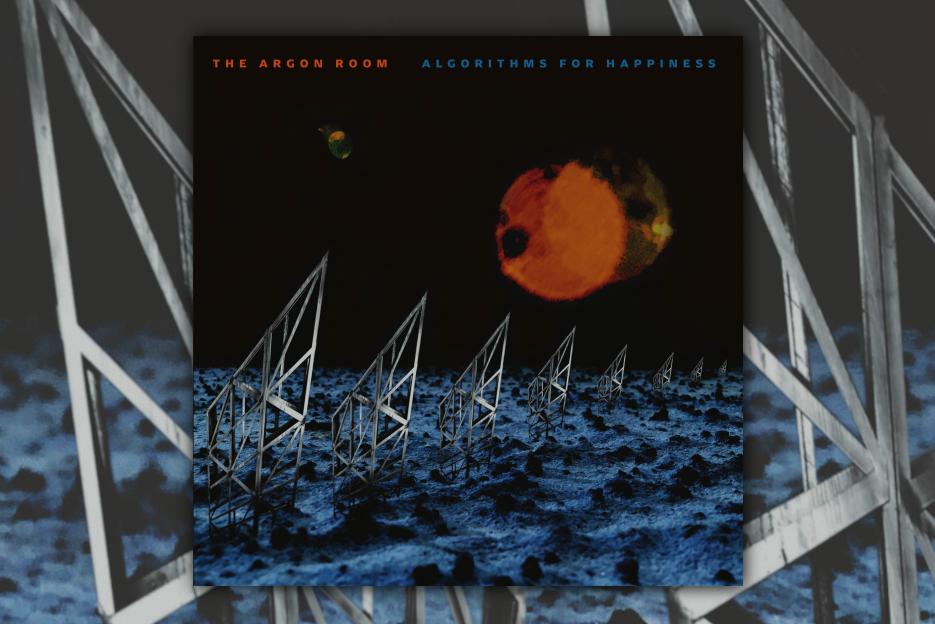
Australian alternative rock outfit The Argon Room deliver a compelling and deeply atmospheric ten-track journey, transforming grief, memory, and the search for meaning into an ambitious musical experience that lingers long after the final note.
Some albums are collections of songs, while others invite listeners into an entire universe of emotions, stories, and ideas. Algorithms For Happiness, the remarkable album from Australian band The Argon Room, belongs firmly in the latter category. An ambitious, loosely threaded concept album, it explores the fragile boundaries between life and death, love and loss, memory and reality, through the story of two characters who leave Earth aboard a small spacecraft in search of a new planet, a new home, and ultimately themselves. But when one dies beside the other in the vast emptiness of space, the survivor is left confronting the ultimate questions: What is life? Are we really here? And how do we continue when someone we love is no longer beside us?
The emotional foundations of the album are deeply personal. Much of its writing began in the aftermath of David Bowie’s death in January 2016, an event that profoundly affected songwriter Simon Starling. In the days following the news, he wrote half of the ten songs that would eventually form the record, with the remaining material developing under the longer shadow of that loss. What began as an expression of grief gradually evolved into something much broader: a meditation on absence, human connection, mortality, and the determination to find meaning even when answers seem impossible.
Ad
The journey opens with “HOLDING MY HEAD,” written the morning after Bowie’s passing. Its emotional starting point is immediately striking: the shock of losing an artistic figure so important that even the familiar certainty of the sunrise and the stars seemed momentarily in question. The brilliant songwriting, dynamic and fluid, perfectly matches the excellent lyrics with experimental and emotive crescendos that, through exquisite sonic research, reach the listeners deeply. The song captures that instinct to hold on to music and memories when everything else feels uncertain.
“EMPTY STAR” follows with an energetic musical direction that contrasts intriguingly with its dark subject matter. Written as the final song for the album, it explores the painful experience of watching someone you love slowly disappear. This tension between rhythmic momentum and emotional darkness becomes one of the record’s most compelling characteristics.
One of the album’s most beautiful moments arrives with “SHADOWS ARE LIGHT GONE.” Originally emerging spontaneously during work on “HOLDING MY HEAD,” its piano chords immediately suggested something worth developing. Producer Timothy Powles subsequently reworked the composition, rearranging its structure and creating a new ending that allows a sense of light to emerge from its shadows.
The emotional intensity continues with “AM I… HELLO,” written a year after Bowie’s death as a direct expression of longing and an imagined attempt to reach someone who is no longer there. Its inspiration also comes from Starling’s mother’s reflections on losing her own mother, particularly the painful realisation that the expected sense of presence or communication never came.
Ad
“TUG OF WAR” introduces a fascinating sonic dimension. Originally a different composition, it was imported into the recording computer at the wrong bit rate, slowing it dramatically and transforming it into an otherworldly soundscape. Almost accidentally, the technical mistake created the perfect atmosphere for the album’s central character, suspended between two realities.
With “MAYBE THERE’S HOPE,” the band explores another thought-provoking territory, drawing inspiration from E. M. Forster’s science-fiction classic The Machine Stops. The song questions how far humanity can advance through technology before losing its capacity for independent thought, curiosity, and original ideas. Its underlying message remains cautiously optimistic: perhaps there will always be people willing to question, explore, and discover.
“A MOMENT TOO LONG” offers a more personal reflection on time and mortality, considering the regret that can accompany a life spent wishing moments away. Its central thought is beautifully simple: life is short, and no moment should be taken for granted.
The title track, “ALGORITHMS FOR HAPPINESS,” has an equally fascinating origin. One evening at Newtown station, Starling encountered a poet busker writing a poem for a young woman on a typewriter. Recognising an unexpected opportunity, he approached the poet after the woman had left and explained the story of the album’s two characters. Within minutes, the poet had written something that would become the foundation of the song, completed by Starling the following day.
“LAST STAR” returns to the immediate aftermath of Bowie’s death, originating as the first musical expression that came to Starling when he picked up his guitar after work that day. Its shortened, distilled arrangement culminates in a cacophonous steam-train passage, a deliberate homage to the opening of The Return of the Thin White Duke, constructed using guitars, bass, and synthesizer.
Ad
Finally, “FUTURE COLONIES” brings the album to a wonderfully uplifting conclusion. Originally conceived as the second part of “MAYBE THERE’S HOPE,” it eventually developed into an independent composition. Its long introduction evokes the atmospheric qualities of The Cure, while Jeffrey Cain’s magnificent guitar contributions add further colour and emotional depth. After such an introspective journey, its hopeful momentum feels like a welcome release.
The Argon Room’s musical identity is rooted in years of experience across Australia’s alternative and independent music scenes. Simon Starling’s journey began with Sydney punk band Cult 45 in 1996, followed by Spectators, Melbourne outfit Etherland, and the project Starling. His 2012 album Semaphore was produced by Steve Kilbey of The Church, with contributions from Church drummer Timothy Powles. Damien Cassidy brings an equally colourful background, including CooCoo Fondoo, The Pip Branson Corporation, and Faker, whose international touring experience included opening for P!nk during the Australian leg of her Funhouse Tour in 2009.
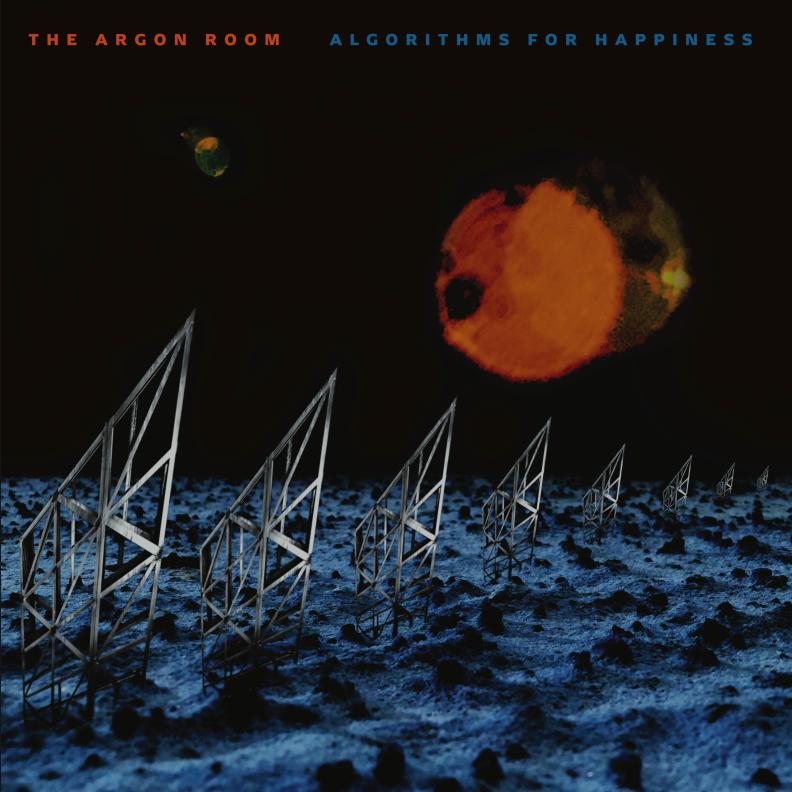
The Argon Room emerged from the 2012 touring lineup of Starling, with Wes Gregorace, Damien Cassidy, and Shaun Gaida helping establish the band. For Algorithms of Happiness, Timothy Powles takes on production duties, while Jeffrey Cain and Mark Axiak contribute distinctive guitar performances.
With Algorithms For Happiness, The Argon Room have created a remarkably thoughtful and emotionally resonant record. Its combination of atmospheric rock, adventurous arrangements, and deeply human storytelling transforms a personal experience of grief into a universal exploration of love, memory, and existence. It is an album that asks difficult questions without offering easy answers, ultimately reminding us that even in the vastest silence, the search for meaning is itself part of being alive.
Check the links below, discover more about The Argon Room and their music, and remember to add their songs to your favorite playlists!
Official Website: www.theargonroom.com
Official Links: The Argon Room
Spotify: The Argon Room
YouTube: The Argon Room
Bandcamp: The Argon Room
Ad



